Skip to content
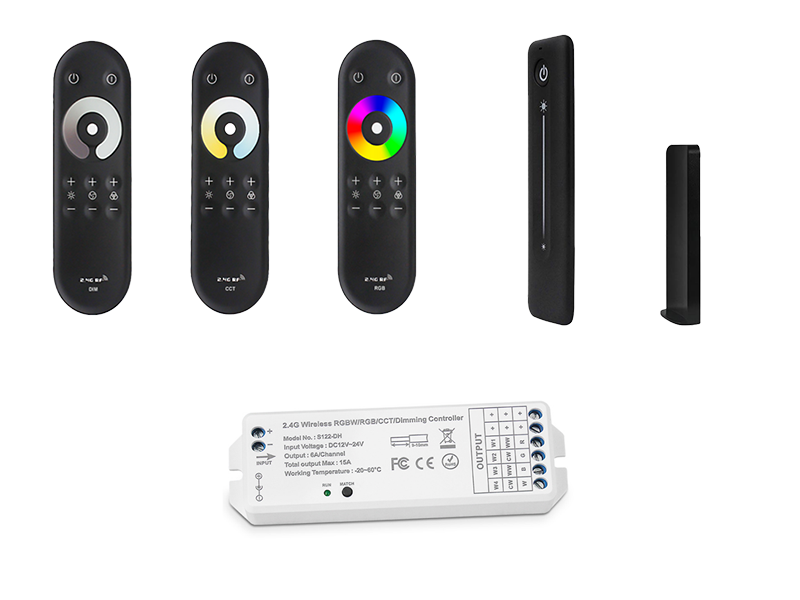
An LED lighting control module is an integrated smart control unit. It mainly includes a main control chip, a signal receiver, driver output channels, a power input with protection circuits, a protective housing, and optional add-on modules. The main chip handles all the control logic, the signal receiver supports wireless or wired control, and the output channels convert control signals into stable current or voltage to drive LED strips. The power interface and protection circuits keep the system safe and reliable, the housing helps with protection and heat dissipation, and the optional modules add features like touch control, scene saving, and smart home integration. All of this makes LED strip lighting more efficient, stable, and easy to control.
1.Why are control modules essential for modern lighting?
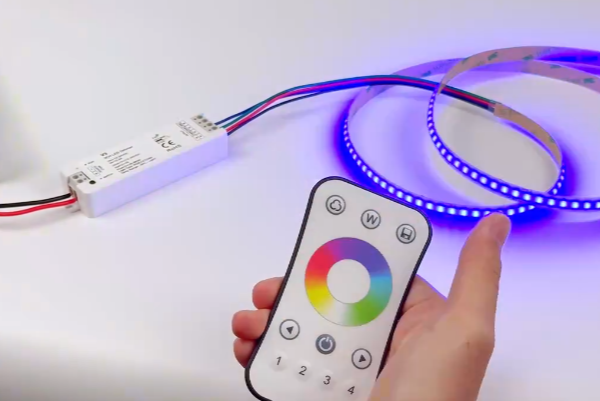
Modern lighting wouldn’t be complete without light control module. They let you fine-tune brightness, color temperature, and smooth transitions, giving you precise control over your lights. Plus, when connected to sensors, smart home systems, or mobile apps, they can handle scheduling, motion sensing, remote control, and scene switching, making your lighting smarter and more convenient. Control modules also help stabilize current and voltage, preventing overcurrent, overvoltage, or overheating, which extends the life of your LED strips and fixtures. For high-power or long-distance setups, they balance loads and distribute power efficiently. On top of that, they support all sorts of lighting effects and custom designs, like RGB/RGBW fades, breathing lights, and chasing effects, making them perfect for homes, businesses, stages, or outdoor spaces. In short, control modules are the key component for achieving high-performance, smart, and customizable lighting.
2.Why do you need a lighting module to connect the LED strip?
① Stable Power Output
LED strips usually need a constant voltage or current to work properly. If you just plug them into an unstable power source, you might see:
Flickering
Shorter lifespan
Overheating or even burning out
A lighting control module helps keep the voltage or current steady, protecting your LED strips.
② Dimming & Color Control
Many LED strips let you:
Adjust brightness (dimming)
Change color temperature (from warm white to cool white)
Switch RGB or RGBW colors
Without a control module, you can only turn them on or off. With one, you can:
Use a remote, wall switch, app, or smart home system
Precisely adjust brightness and colors
Save your favorite lighting scenes
③ Extend LED Lifespan
LEDs are sensitive to voltage, current, and frequency. Modules can:
Prevent over-voltage or over-current
Reduce electrical shocks from frequent switching
Keep your strips running in optimal condition for longer
④ Smart & Connected Features
Modern modules can:
Schedule on/off times
Connect with smart home devices (like sensors or phone apps)
Create animated or gradient lighting effects
This is especially useful for commercial spaces, kitchen cabinets, or mood lighting.
⑤ Simpler Installation & Compatibility
Control modules often match different voltages, wattages, and types of LED strips, making installation easier and safer, and avoiding the risk of directly wiring the strips.
Bottom line: Lighting control modules don’t just protect your LEDs—they let you dim, change colors, go smart, and extend lifespan. They’re a must-have for any modern LED setup.
3.Applications of lighting controllers

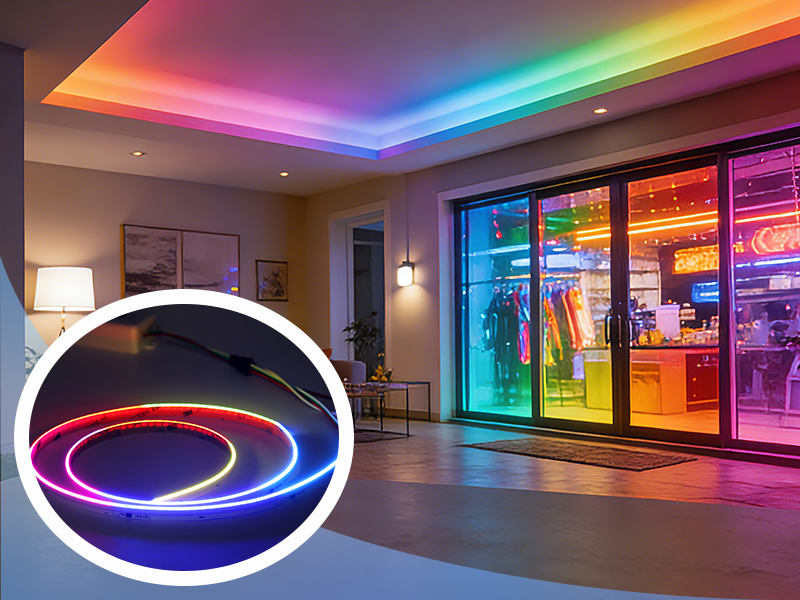
① Residential Lighting
Perfect for Home Ambiance
Smart LED strips under kitchen cabinets with adjustable dimming
RGB/RGBW ambient lighting for living rooms and bedrooms
Low-brightness night lights for staircases and hallways
Why You’ll Love It:
Smooth Dimming: Easily adjust brightness to protect your eyes and set the mood
Flexible Colors & Temperatures: Switch between warm white, cool white, or vibrant colors
Smart Scenes: Sync with your smart home system for automatic on/off and scene modes
Remote Control: Control lights anytime with your phone or voice assistant
② Commercial Lighting
Enhance Your Business Space
LED strips for store displays and showcases
Office or conference room lighting management
Hotel lobbies and restaurant ambiance control
Why It Works:
Consistent & Precise Brightness: Perfect lighting for every display
Multi-Zone Control: Adjust brightness or color for different areas independently
Energy Efficient: Smart modules help reduce electricity costs
Easy Maintenance: Modular design makes replacement and troubleshooting quick
③ Outdoor & Landscape Lighting
Bring Your Outdoors to Life
Garden, terrace, and courtyard pathway lighting
Square or building facade illumination
Holiday or event decorative lights
Why It Stands Out:
Auto On/Off & Timers: Lights turn on at sunset and off automatically at night
Waterproof & Dustproof (IP65/IP67/IP68): Perfect for outdoor conditions
Color & Brightness Flexibility: Create stunning landscape effects
Smart Integration: Works with security systems, sensors, or music-controlled lighting
④ Special Applications
Professional-Grade Control
Stage or performance lighting (DMX modules)
Industrial or warehouse lighting (0-10V or DALI modules)
Key Advantages:
Precise Brightness & Color Control: Ideal for professional shows and displays
Multi-Channel Sync: Control hundreds or thousands of lights together
High Stability: Industrial-grade modules handle complex environments
4.The key functionalities of a lighting controller
Led strip controller Features & Benefits
1. On / Off Control
Easily manage single lights, multiple lights, or entire lighting groups with instant response. Prevents current surges, enhances system stability, and extends the lifespan of your LEDs.
Ideal for: Cabinet lighting, LED strips, commercial displays, and basic functional lighting.
2. Dimming Control
Enjoy smooth 0–100% stepless dimming with PWM, 0–10V, or Triac methods. Reduce flicker, save energy, and create the perfect lighting ambiance for any setting.
Benefits: Improved visual comfort, energy efficiency, flexible mood settings.
3. Color Temperature (CCT) Control
Switch seamlessly between warm (2700K) and cool white (6500K) lighting. Supports single-channel or dual-color LED strips, helping you match circadian rhythms and daily lighting needs.
Applications: Kitchens, wardrobes, offices, retail spaces.
4. RGB / RGBW Color Control
Unlock millions of colors with multi-channel independent control. Create dynamic effects like gradients, jumps, or breathing to transform any space.
Perfect for: Ambient lighting, decorative setups, commercial venues, and entertainment areas.
5. Scene Control
Preset multiple lighting scenes and switch instantly between brightness, color, and color temperature combinations. Customize your own scenes for any occasion.
Examples: Work mode, Relaxation mode, Night light mode, Display mode.
6. Timer & Automation
Schedule lights to turn on/off automatically, follow sunrise/sunset, or integrate with motion and light sensors.
Advantages: Increased convenience, reduced manual effort, enhanced energy efficiency.
7. Smart & Remote Control
Control your lighting via WiFi, Bluetooth, RF, Zigbee, or mobile apps. Fully compatible with smart home platforms like Alexa and Google Assistant.
Suitable for: Smart homes, modern residences, intelligent commercial spaces.
8. Multi-zone & Multi-device Control
Manage multiple lighting zones simultaneously, synchronize multiple controllers, and group devices for efficient control.
Applications: Commercial showrooms, hotels, large-scale residential lighting systems.
9. Safety Protection & Stable Output
Built-in overload, short-circuit, and over-temperature protection, ensuring stable current/voltage output.
Core benefits: Protects your system, prevents fixture damage, and enhances reliability.
10. Protocol & System Compatibility
Supports PWM, 0–10V, DALI, DMX, and other mainstream protocols. Seamlessly integrates with LED drivers, strips, and sensors for flexible, professional-grade lighting solutions.
Benefit: Easy scalability, high system compatibility, and professional performance.
5.Different Types of LED Strip Light Controller
LED tape light controller Classification & Applications
1.By LED Strip Type
| Controller Type | Supported LED Strip | Main Functions | Common Applications |
| Single Color Controller | Single Color LED Strip | On/Off, Stepless Dimming | Under-cabinet, wardrobe, linear lighting |
| CCT / Dual White Controller | Warm White + Cool White LED Strip | Brightness & color temperature adjustment | Kitchen, office, commercial lighting |
| RGB Controller | RGB LED Strip | Dimming, color changing, dynamic modes | Ambient lighting, feature walls |
| RGBW Controller | RGBW LED Strip | Color changing + pure white output | High-end residential, hotel lighting |
2. By Dimming Method
| Controller Type | Supported LED Strip | Main Functions | Common Applications |
| PWM Dimming Controller | Low-voltage LED Strip | Smooth dimming, flicker-free | Cabinet lights, display cases |
| 0–10V Dimming Controller | Commercial LED Strip | Analog signal dimming | Offices, commercial lighting |
| Triac Dimming Controller | Triac dimmable LED Strip | Compatible with wall dimmers | Home main lighting |
| DALI Controller | DALI system fixtures | Precise digital control | Smart building lighting |
3. By Control Method
| Controller Type | Supported LED Strip | Main Functions | Common Applications |
| Manual Knob Controller | Single Color / CCT | Physical dimming | Basic lighting |
| Touch Controller | Single Color / CCT / RGB | Touch dimming / color changing | Modern home lighting |
| IR Remote Controller | Various LED Strips | Remote dimming / color changing | Home ambiance lighting |
| RF Remote Controller | Multi-channel LED Strips | Wall-penetrating control | Whole-house LED strip systems |
4. By Smart Level
| Controller Type | Supported LED Strip | Main Functions | Common Applications |
| Bluetooth LED Controller | Low-voltage LED Strip | Mobile app control | Small-scale smart lighting |
| WiFi LED Controller | LED Strip | App / voice control | Smart home system |
| Zigbee LED Controller | Smart LED Strip | Multi-device linkage | Smart home ecosystem |
5. By Installation Method
| Controller Type | Supported LED Strip | Main Functions | Common Applications |
| Built-in Controller | LED strip system | Hidden installation | Cabinets, furniture lighting |
| External Controller | LED strip system | Easy maintenance | Commercial display lighting |
6. By Voltage Level
| Controller Type | Supported LED Strip | Main Functions | Common Applications |
| 5V Controller | USB LED Strip | Low-power control | Desktop, PC ambient lighting |
| 12V LED Controller | Standard LED Strip | Stable output | Cabinet lighting, showcase lighting |
| 24V Controller | Long-distance LED Strip | Low voltage drop | Commercial linear lighting |
6.A Guide to Selecting the Appropriate Lighting Controller

1. Know Your Fixture Type
Single-color → Dimming only
Tunable White (CCT) → Dimming + color temperature control
RGB / RGBW → Color + brightness control
DMX Stage Lights → Professional DMX LED controller
2. Match Voltage & Power
Ensure controller voltage = fixture voltage (5V / 12V / 24V)
Controller output ≥ total fixture power to avoid overload
3. Pick a Control Method
Manual: switches or dimmers (simple, low cost)
Remote: RF/IR, ideal where wiring is difficult
Smart: App / Wi-Fi / Bluetooth for automation, scenes, and scheduling
4. Choose the Right Protocol
Wi-Fi: remote + cloud control
Bluetooth: low-latency, short-range control
0-10V / DALI: commercial & building systems
DMX512: stage & performance lighting
5. Consider Smart Features
Scheduling & scene modes (cinema, dinner, mood lighting)
Voice control with Alexa / Google Assistant
Integration with smart home platforms (HomeKit, Tuya, SmartThings)
6. Safety & Reliability
IP rating for outdoor/wet areas
Overload & short-circuit protection
Good heat dissipation for long-term stability
Pair with certified power supplies
Quick Examples
Kitchen Cabinet LED Strip: 12V, PWM dimming + App, scheduling & CCT
Living Room RGB Ambiance: RGB/RGBW, Wi-Fi/Bluetooth + App, scene + voice control
Commercial Lighting: 0-10V/DALI, centralized control, zoning + scheduling
✅ Key Takeaways: match fixture, voltage, power, protocol, and smart features while prioritizing safety and compatibility.
7. LED Strip and Control Module Installation Guide
1. Basic Understanding of LED Strips and Controllers
Different types of LED strips have varying structures and lighting methods, so the requirements for controllers differ accordingly. Common LED strip types include COB strips, SMD strips, and neon strips.
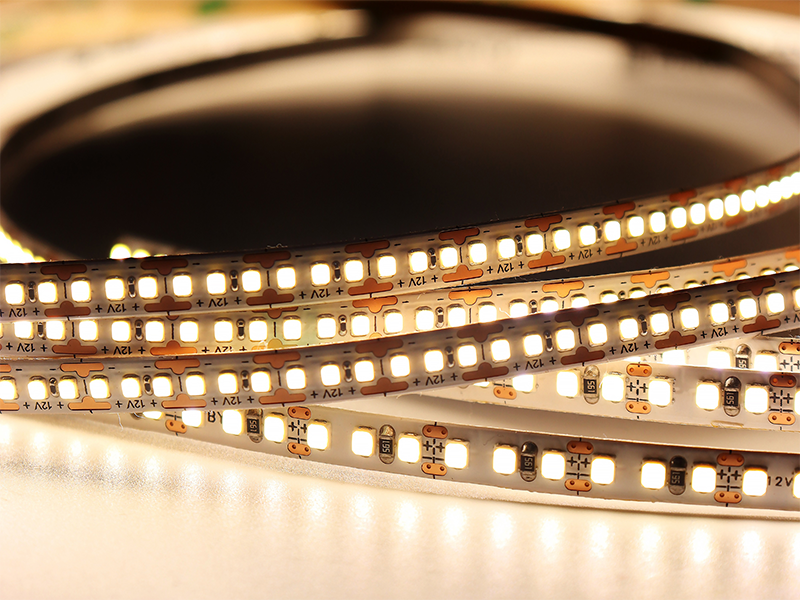
① cob led strip lights
COB lights use high-density chip-on-board technology, providing continuous, soft lighting without noticeable light spots—ideal for close-range illumination.
Uniform light, no visible LED dots
Common voltage: 12V / 24V
Requires constant voltage controllers
Supports dimming and tunable white (CCT) control
Typical applications: under-cabinet lighting, wardrobe lighting, linear lighting
② SMD led lights
SMD strips are the most common type of LED strips, with LEDs mounted on the strip surface. They come in various models and have broad application possibilities.
Wide selection and cost-effective
Available in single color, RGB, RGBW, etc.
Individual LED dots are visible, with noticeable granularity
Requires matching controller channels
Typical applications: backlighting, commercial displays, decorative lighting
③ Neon led tape
Neon lights are encased in silicone, providing diffused, soft lighting with waterproof and flexible design capabilities.
Uniform light, visually soft
Flexible and suitable for creative shapes
Usually 12V / 24V constant voltage
Outdoor use requires waterproof controllers
Typical applications: architectural outlines, outdoor decoration, ambiance lighting
④ Summary
When choosing an LED controller, focus on three key points:
Voltage compatibility
Matching the strip type and channel
Sufficient controller power
With proper matching, your LED lighting system will operate stably and achieve optimal lighting effects.
2. Preparations Before Installation
① Confirm LED Strip Parameters
Ensure working voltage matches
Calculate power per meter & total power
Determine maximum connectable length
② Choose a Suitable Controller
Output voltage matches LED strip
Output power ≥ total strip power + 20% margin
Control type matches (Single color / CCT / RGB / RGBW)
③ Prepare Necessary Tools
Power adapter / LED driver
Scissors, terminals, connectors
Screwdriver, multimeter (optional)
3. Standard Wiring Method for LED Strips and Controllers
① Basic Wiring Structure
AC mains → LED power supply → LED controller → LED strip
② Wiring Instructions
Match positive and negative terminals (V+ / V-)
Match RGB / RGBW channels correctly
Avoid reverse connection or loose contacts
③ Connecting Multiple Strips
Series vs. parallel connection
Parallel recommended for long distances
Methods to avoid voltage drop: dual-end power feed / segmented power supply
4. Installation Tips for Different Types of LED Strips
① Single Color LED Strip
Single-channel output
Typical applications: under-cabinet lighting, linear lighting
② CCT (Tunable White) LED Strip
Dual-channel for cool white / warm white
Color temperature adjustment logic
③ RGB / RGBW LED Strip
Multi-channel wiring standard
Ensure controller compatibility with LED chip type
5. Common Installation Scenarios
① Under-Cabinet LED Lighting
Concealed installation
Compatible with touch, sensor, or dimming controllers
② Ceiling Grooves & Linear Lighting
Aluminum channel for heat dissipation
Power supply planning for long runs
③ Commercial Display & Ambiance Lighting
Multi-zone synchronized control
0-10V / DALI controller applications
6. Common Installation Issues and Solutions
Strip not lighting → Check voltage and polarity
Flickering → Insufficient power supply
Dim end → Voltage drop issue
Controller unresponsive → Signal or pairing problem
7. Safety and Installation Precautions
Avoid overloading the system
Do not install controllers in enclosed spaces
Use waterproof controllers (IP65+) in outdoor or humid environments
Always turn off power during installation to ensure personal safety
8. Conclusion: Proper Installation Maximizes LED Strip Performance
LED strips, controllers, and power supplies form a complete system.
A well-designed system = more stable + aesthetically pleasing + durable lighting.
8.Conclusion:lighting controllers enhance both the intelligence and usability of lighting
A lighting controller is an essential core component of modern lighting systems. It not only ensures the stable operation of lights but also directly impacts the comfort, flexibility, and intelligence of the lighting environment. Through precise on/off control, smooth dimming, color temperature adjustment, and scene integration, a lighting controller upgrades lighting from “passive illumination” to “active response,” truly serving the function and experience of the space. Whether it’s functional lighting under cabinets, accent lighting for commercial displays, or ambient lighting in smart homes, choosing the right lighting controller is a key step toward creating an efficient, energy-saving, and user-friendly lighting system.